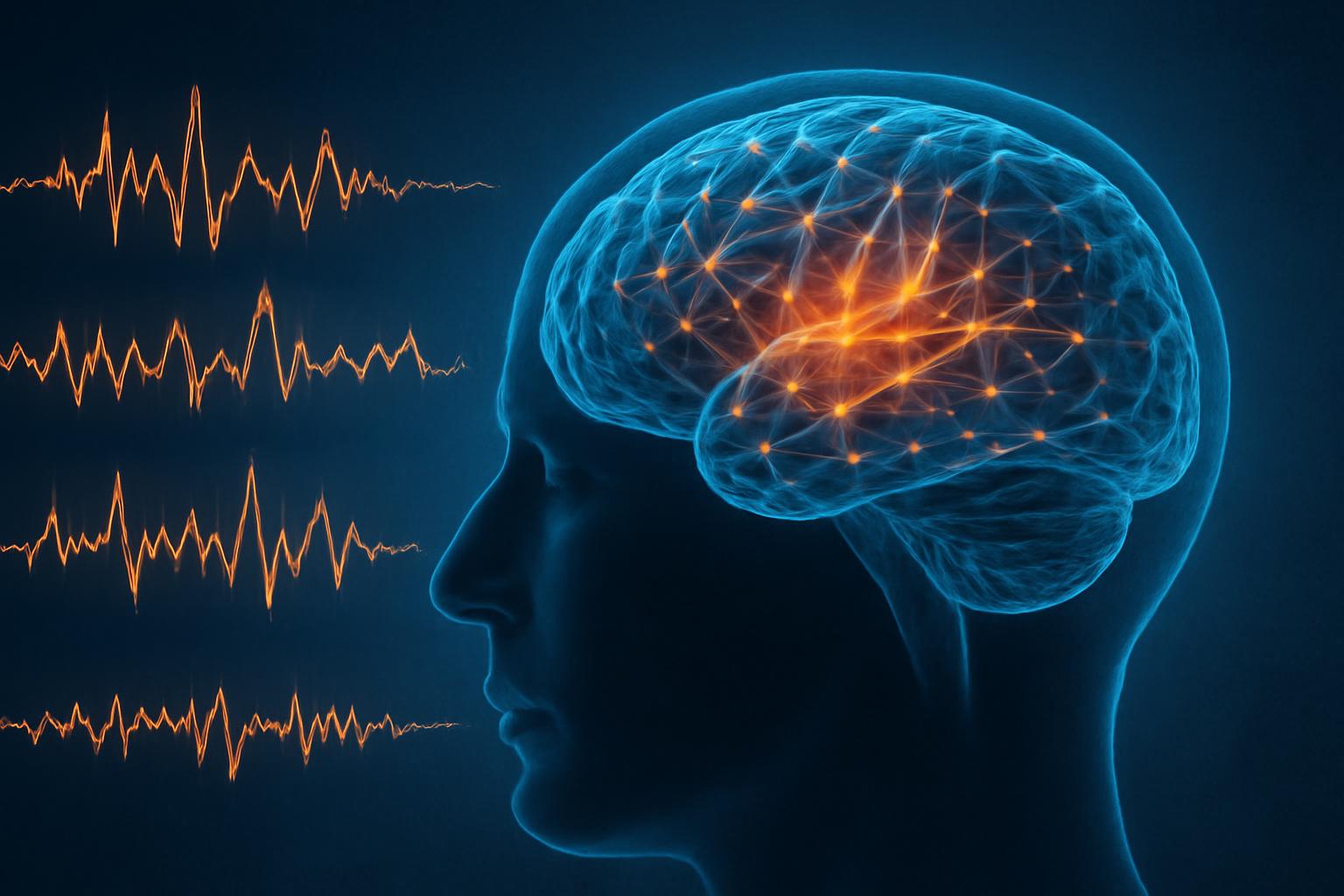
LSD brain wave research is becoming an important part of modern psychedelic neuroscience. Researchers are using electroencephalography (EEG), functional brain imaging, and computational analysis to study how LSD changes communication between brain regions and alters patterns of neural activity.
A recent science news signal highlighted research reporting that LSD may speed up certain brain waves and increase neural complexity. Findings like these are intriguing, but they should be interpreted carefully. A change in brain activity is not automatically proof of a medical benefit, and early results may not apply to every person, dose, setting, or research design.
This article explains what scientists mean by brain waves and neural complexity, how LSD laboratory studies are conducted, and why accurate documentation and analytical methods are essential for trustworthy psychedelic research.
What Is LSD Brain Wave Research?
LSD brain wave research examines electrical activity in the brain before, during, and after exposure to lysergic acid diethylamide. Most studies use EEG, a noninvasive method that records electrical signals through sensors placed on the scalp.
These signals are commonly grouped into frequency bands, including:
- Delta: associated mainly with deep sleep and slow-wave activity.
- Theta: often studied in relation to memory, attention, and internal mental processing.
- Alpha: commonly linked with relaxed wakefulness and sensory processing.
- Beta: associated with active thinking, attention, and alertness.
- Gamma: a faster frequency range studied in perception, integration, and complex cognition.
These categories are useful, but they do not provide a complete explanation of subjective psychedelic experiences. Brain activity is influenced by sleep, anxiety, movement, medication, prior experience, expectations, and the testing environment. For that reason, researchers combine EEG results with behavioral measures, clinical interviews, physiological monitoring, and carefully controlled study protocols.
Why Neural Complexity Matters
Neural complexity refers to the richness, variability, and information content of brain activity. A brain signal can be described as more complex when it contains many changing patterns that are not simply repetitive or predictable.
Scientists use mathematical tools to estimate this complexity. Some methods examine signal entropy, while others assess how integrated or differentiated activity is across multiple brain regions. The goal is to understand whether a psychedelic state changes the balance between organized brain networks and more flexible, diverse patterns of communication.
In ordinary waking consciousness, brain networks often operate within familiar patterns. Psychedelic compounds may temporarily alter the stability of those patterns. Some researchers have proposed that this could help explain changes in perception, self-awareness, sensory integration, and the feeling that thoughts are less constrained.
However, “more complex” does not mean “better” in every situation. Complexity is a measurement, not a value judgment. A healthy brain must also coordinate information efficiently and maintain basic functions such as attention, emotional regulation, and safe decision-making.
What Recent Findings May Suggest
Reports describing faster brain waves and increased neural complexity are consistent with a broader area of psychedelic scientific research: the study of how psychedelics temporarily change communication between brain systems.
Possible interpretations include:
- Some brain regions may exchange information in less predictable ways.
- Normally separate networks may show increased interaction.
- Changes in sensory processing may contribute to altered perception.
- Greater signal variability may accompany unusual thought patterns or expanded associations.
- Changes in network organization may help explain why context and expectations strongly influence psychedelic experiences.
These are research hypotheses rather than settled conclusions. A single study cannot establish how LSD works in every brain or determine whether a specific neural pattern produces a particular psychological outcome. Replication, larger samples, transparent analysis, and comparison with other substances are necessary.
Researchers must also distinguish between effects caused by LSD and effects caused by the testing environment. Lying still inside an EEG laboratory, receiving repeated instructions, or experiencing physical stimulation from equipment can influence brain signals. Good experimental design attempts to separate these factors.
How Researchers Study LSD in the Laboratory
Professional psychedelic laboratory studies typically begin with a detailed protocol. The protocol defines the research question, participant criteria, compound identity, dose administration procedures, monitoring plan, and statistical analysis.
Participant screening
Human studies generally screen participants for medical and psychiatric risk factors. Researchers may review cardiovascular history, current medications, personal or family psychiatric history, previous psychedelic exposure, and other factors that could affect safety or data quality.
Controlled administration
Study staff document the identity and amount of the test material. In regulated research, the material is handled under applicable federal, state, institutional, and laboratory requirements. Accurate records help researchers connect observed effects to a known compound and preparation.
EEG and related measurements
EEG can be recorded during resting states or while participants complete attention, perception, memory, or emotional tasks. Researchers may also combine EEG with functional magnetic resonance imaging, eye tracking, heart-rate monitoring, and standardized psychological questionnaires.
Data cleaning and analysis
EEG data can be affected by blinking, muscle tension, movement, electrical interference, and poor sensor contact. Scientists use established preprocessing methods to remove or reduce these artifacts. If those steps are inconsistent, apparent changes in brain waves may reflect noise rather than a pharmacological effect.
Computational analysis may examine power in different frequency bands, synchronization between regions, signal entropy, complexity, and changes over time. Because researchers can test many variables, preregistered methods and appropriate statistical corrections are important protections against misleading results.
The Importance of Research-Grade Materials
Reliable psychedelic science depends on more than advanced imaging equipment. It also depends on documented materials, validated methods, and traceable laboratory workflows.
For analytical and pharmacological research, laboratories may use certified reference materials, analytical standards, control samples, and documented sample-handling procedures. These tools help scientists identify target compounds, detect degradation, and compare results between experiments.
In mushroom chemistry research, the same principles apply when studying psilocybin, psilocin, related alkaloids, or other fungal constituents. A sample labeled by appearance alone is not enough for precise scientific work. Species, strain, growing conditions, storage, moisture, age, and processing can all affect chemical composition.
Researchers evaluating psychedelic fungi may therefore use a combination of:
- Validated chromatographic methods.
- Mass spectrometry or other compound-identification techniques.
- Certified or well-characterized reference materials.
- Chain-of-custody and sample documentation.
- Quality-control samples and laboratory blanks.
- Species identification methods when appropriate.
- Clear reporting of uncertainty and detection limits.
These practices are relevant to anyone reviewing a psychedelic mushroom research catalog, evaluating laboratory data, or comparing findings across psilocybin research publications. They are also why professional research suppliers should provide documentation rather than relying on vague claims about potency or identity.
LSD Research and Psilocybin Research Are Not Interchangeable
LSD and psilocybin are both classic psychedelics, but they are not identical research materials. They differ in chemical structure, duration, pharmacokinetics, subjective effects, and study logistics.
Psilocybin is converted in the body to psilocin, which interacts with several serotonin receptors. LSD also acts on serotonin systems but has a different molecular profile and often produces a longer-lasting experience. As a result, an EEG finding observed with LSD cannot automatically be applied to psilocybin mushrooms.
This distinction matters when reading psychedelic mushroom scientific literature. A headline about LSD brain activity may be relevant to broader theories of psychedelic neuroscience, but it is not direct evidence about mushroom species, psilocybin purity, or the outcome of a psilocybin laboratory study.
Researchers should identify the exact compound, formulation, dose, timing, participant population, and measurement method before comparing studies. Careful comparison prevents the common mistake of treating all psychedelic substances as though they produce the same biological effects.
Important Limitations in Current Psychedelic Neuroscience
Despite rapid growth in the field, psychedelic brain research has several limitations.
Small sample sizes
Many early studies include relatively few participants. Small samples can make it difficult to identify individual differences or determine whether a result will be replicated in a broader population.
Difficulty with blinding
The noticeable effects of LSD can make it difficult to maintain a true placebo comparison. If participants and study staff know which condition is being administered, expectations may influence subjective reports and some behavioral outcomes.
Complex psychological effects
Brain recordings do not capture the entire psychedelic experience. Personal meaning, emotional context, memories, environment, and interpersonal support may all influence outcomes. Neural data should be interpreted alongside psychological and clinical information.
Long-term questions
Changes measured during an acute psychedelic state may not explain what happens days, weeks, or months later. Longitudinal research is needed to investigate persistence, therapeutic relevance, possible risks, and the role of follow-up support.
How to Evaluate Psychedelic Research Information
Readers looking for psychedelic mushroom research information or LSD laboratory studies should ask several basic questions:
- Was the work conducted in humans, animals, cells, or a computational model?
- What substance and dose were used?
- How many participants completed the study?
- Was there a placebo or active comparison group?
- Were the analytical and statistical methods clearly described?
- Did the researchers measure a short-term brain change or a lasting outcome?
- Have independent teams replicated the finding?
It is also useful to distinguish a peer-reviewed publication from a press release, news summary, preprint, or opinion article. News coverage can make complex results accessible, but the original study design provides the details needed for responsible interpretation.
Our psychedelic research blog is intended as a starting point for readers exploring topics related to psilocybin, LSD, mushroom chemistry, and laboratory analysis. Readers can also review the site’s post archive and category index to find related educational content as the site develops.
Safety and Legal Considerations
LSD and psilocybin remain controlled substances under U.S. federal law, although state and local policies may differ and continue to change. Research access, possession, manufacture, testing, and administration are subject to legal and institutional requirements.
This article is for educational purposes only. It does not provide instructions for obtaining, producing, dosing, or using LSD or psilocybin mushrooms. Unsupervised use may involve legal, psychological, and physical risks, especially for people with certain medical conditions, psychiatric histories, or medication interactions.
Legitimate psychedelic research is conducted through qualified institutions, trained personnel, approved protocols, and appropriate safety monitoring. A consumer product claim is not a substitute for laboratory verification or professional medical guidance.
Frequently Asked Questions
What is the main focus of LSD brain wave research?
The field examines how LSD changes electrical brain activity, frequency-band power, communication between brain regions, and measures of neural complexity. Researchers compare these changes with subjective reports and behavioral results.
Does increased neural complexity prove that LSD improves brain function?
No. Increased complexity is an observed measurement, not proof of improved cognition, mental health, or treatment benefit. Its meaning depends on the study design, the brain region measured, the timing of the recording, and the participant’s broader response.
Can LSD findings be applied directly to psilocybin mushrooms?
No. LSD and psilocybin have different chemical and pharmacological properties. Research findings may contribute to general theories of psychedelic neuroscience, but each substance requires its own controlled studies.
Why are analytical standards important in psychedelic research?
Analytical standards help laboratories identify and measure compounds accurately. They support quality control, method validation, reproducibility, and clearer interpretation of results involving LSD, psilocybin, psilocin, and related materials.
What makes a psychedelic research result more trustworthy?
Useful indicators include a clearly described protocol, appropriate controls, well-documented materials, transparent data analysis, adequate safety procedures, peer review, and replication by independent researchers.
The Future of Psychedelic Brain Research
LSD brain wave research may help scientists understand how psychedelic states affect perception, attention, memory, and large-scale brain organization. The most valuable progress will likely come from combining EEG with imaging, behavioral testing, pharmacology, and long-term clinical follow-up.
At the same time, strong conclusions require patience. Better research documentation, reliable reference materials, validated laboratory methods, and careful distinction between LSD and psilocybin will make the field more reproducible. For readers and researchers alike, the goal should be evidence that is precise, transparent, and appropriately cautious.