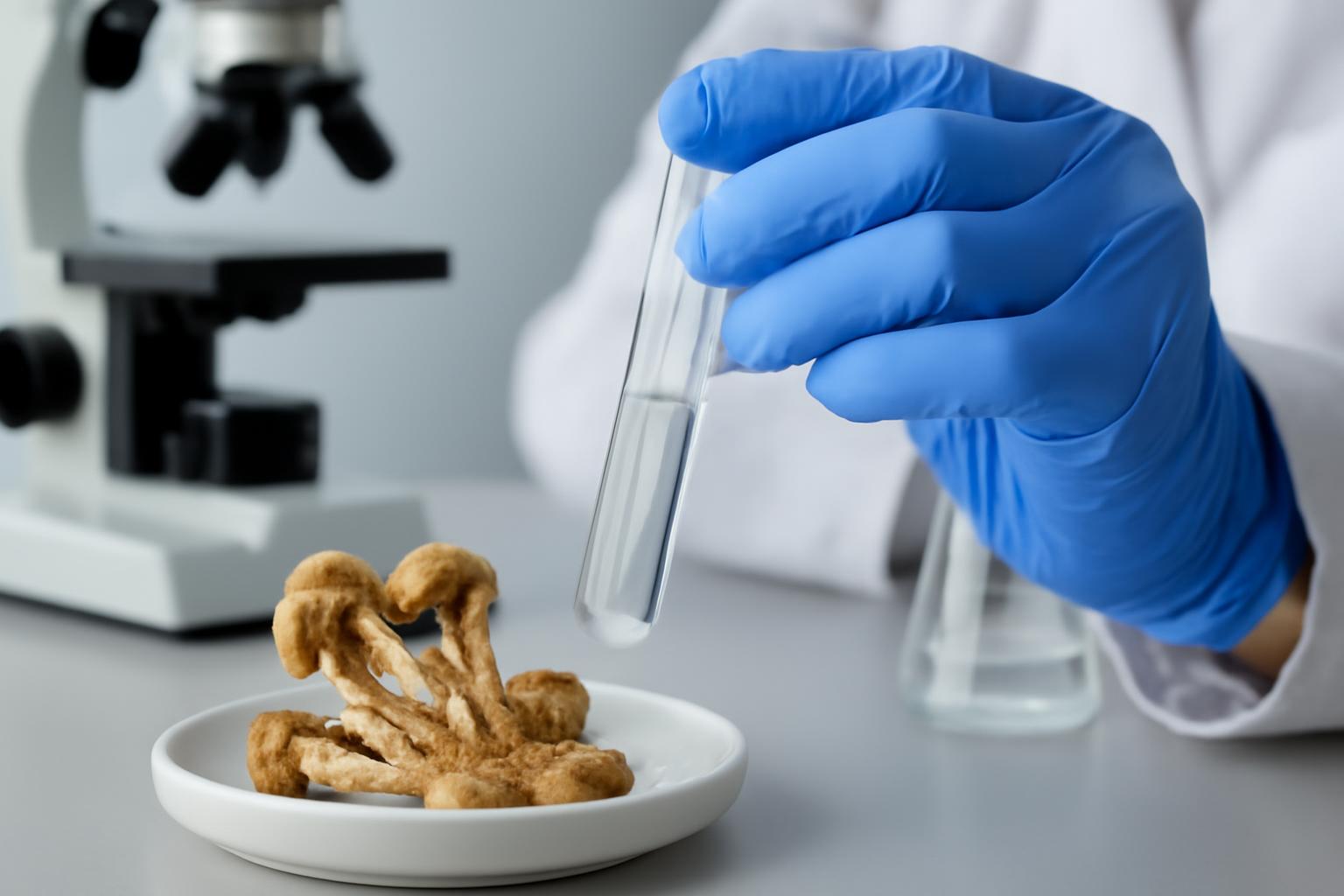
Interest in psychedelic mushroom science is growing across universities, biotechnology companies, clinical research groups, and independent laboratories. As more researchers investigate psilocybin, psilocin, mushroom genetics, and potential therapeutic applications, the quality of research materials has become a central concern.
That is where psilocybin analytical testing plays an important role. Accurate testing helps researchers understand what a sample contains, how consistent it is, and whether the results can be reproduced by another laboratory. Without reliable identification and documentation, even a carefully designed experiment can produce uncertain conclusions.
This article explains why analytical testing matters, what laboratories typically evaluate, and how responsible researchers approach psychedelic fungi research in the United States. It is intended for educational and scientific purposes only. Laws governing psilocybin, psilocin, LSD, mushrooms, and laboratory materials vary by jurisdiction. Research should be conducted only by appropriately qualified and authorized organizations.
Why Psilocybin Analytical Testing Matters
Natural mushroom samples are biologically variable. The same species may show differences in chemical composition depending on genetics, growing conditions, maturity, storage, and processing. Two samples that look similar may not contain the same compounds or concentrations.
Visual appearance alone cannot confirm the identity, potency, or safety of a mushroom sample. This is especially important when researchers compare results across different laboratories or conduct studies that depend on precise chemical measurements.
Analytical testing supports several essential goals:
- Identity confirmation: Testing can help determine whether a sample contains the target compounds or belongs to the expected chemical group.
- Composition analysis: Laboratories can measure psilocybin, psilocin, and other relevant compounds using validated methods.
- Consistency: Researchers can compare batches and identify natural variation in samples.
- Contaminant screening: Proper laboratory procedures may detect unwanted substances, although testing panels and capabilities vary.
- Reproducibility: Complete records allow other researchers to understand how samples were prepared and analyzed.
These functions make analytical testing a foundation of psychedelic mushroom scientific research rather than an optional final step.
What Laboratories Evaluate in Mushroom Research
The exact testing plan depends on the research question, sample type, and laboratory equipment. A university studying fungal genetics may need different services from a chemistry laboratory examining purified reference materials. Even so, several categories appear regularly in professional psychedelic fungi research.
Compound identification and measurement
Researchers may test for psilocybin and psilocin, along with related compounds that can affect the chemical profile of a sample. Measurement is usually performed with validated chromatographic or mass-spectrometric techniques selected for the material being studied.
A laboratory report should explain the method used, the units of measurement, the reporting limits, and any relevant uncertainty. A number without method information is difficult to interpret and should not be treated as a complete scientific result.
Species and specimen identification
Mushroom species identification can involve physical characteristics, microscopy, DNA-based methods, or a combination of approaches. These services are useful because common names are not always consistent, and visual identification may be unreliable when specimens are damaged, immature, dried, or processed.
Species identification and chemical testing answer different questions. A DNA result may help identify biological material, while chemical analysis measures compounds in the submitted sample. For some projects, both forms of testing are necessary.
Contaminant and quality screening
Research laboratories may also examine samples for microbial contamination, heavy metals, residual solvents, pesticides, or other unwanted substances. The appropriate panel depends on how the material was produced, stored, and prepared.
No single test can guarantee that a sample is suitable for every purpose. Researchers should review the laboratory’s scope, sample requirements, quality controls, and reporting limitations before relying on a result.
The Role of Psilocybin Analytical Standards
Psilocybin analytical standards are characterized materials used to help laboratories identify and quantify target compounds. They provide a comparison point during instrument analysis and support the development, validation, and ongoing monitoring of laboratory methods.
Analytical standards are not the same as consumer products. They are research materials intended for controlled laboratory use, and they must be handled according to applicable laws, institutional policies, and safety procedures. Their value comes from documented identity, concentration, purity, storage conditions, and traceability.
When selecting psilocybin reference materials, researchers commonly review:
- Certificate or documentation describing the material
- Declared identity and concentration
- Purity information and testing method
- Lot or batch number
- Expiration or retest information
- Storage and handling requirements
- Chain-of-custody and shipping documentation
Clear documentation helps reduce the risk of confusing a reference material with an unverified sample. It also makes future audits, method comparisons, and publication review more straightforward.
How Testing Supports Reproducible Research
Reproducibility is one of the most important principles in science. A finding becomes more useful when independent researchers can repeat the work and obtain comparable results. In mushroom chemistry research, reproducibility depends heavily on sample preparation and analytical detail.
For example, researchers should document whether a sample was tested fresh, dried, powdered, extracted, or otherwise processed. They should also record storage temperature, time between collection and analysis, extraction solvent, sample mass, instrument method, calibration approach, and quality-control results.
These details help explain why two laboratories may report different findings. Differences do not always mean that one result is incorrect. They may reflect differences in sample age, preparation, instrumentation, calibration, or reporting limits.
A strong research record connects the sample to the result. This may include photographs, specimen codes, collection dates, batch information, laboratory accession numbers, and written procedures. Such documentation is valuable for academic projects, clinical development, quality programs, and long-term mycology research.
Choosing a Mushroom Research Laboratory Supplier
Organizations looking for a mushroom research laboratory supplier should evaluate more than price or turnaround time. A suitable provider should be able to explain its capabilities clearly and identify which services are performed in-house or through an external partner.
Questions to ask before submitting a sample
- What sample types does the laboratory accept?
- Which compounds or contaminants are included in the requested panel?
- What analytical methods and instruments are used?
- Are methods validated for mushroom matrices or related materials?
- How are calibration and quality-control checks performed?
- What information will appear on the final report?
- How are samples labeled, stored, and tracked?
- Can the laboratory support chain-of-custody requirements?
- What are the reporting limits and known limitations?
A professional provider should not promise certainty beyond what its method can establish. Honest reporting of limitations is a sign of a more reliable laboratory relationship.
For additional educational material, readers can visit the Psychedelic Shrooms Delivery research blog. The site is intended to provide accessible information about psychedelic mushrooms, laboratory topics, and responsible research discussions.
Documentation in Psychedelic Mushroom Research
Research documentation is often overlooked, but it can determine whether a result is useful months or years later. A complete project file should describe the source and condition of the material, the reason for testing, the analytical method, and the interpretation of the result.
Documentation should avoid unsupported claims such as “verified,” “safe,” or “pure” unless those terms are clearly defined by a specific test and reporting standard. For example, a laboratory may confirm the presence of psilocybin but not determine whether a sample is free from every possible contaminant.
Researchers should also distinguish between a test result and a conclusion. A result may show that a compound was detected above a particular reporting limit. It does not automatically establish clinical effectiveness, legal status, safety for human consumption, or suitability for medical use.
Readers interested in following new articles can review the site’s available post index and explore the category archive for related topics.
Regulatory and Ethical Considerations in the United States
Psilocybin and psilocin remain controlled substances under federal law in the United States, while state and local rules may differ. LSD is also subject to strict legal controls. Some jurisdictions have created limited research, clinical, or supervised-use frameworks, but these do not automatically authorize possession, manufacturing, distribution, or testing in every location.
Laboratories and researchers should confirm requirements involving controlled-substance registration, institutional review, biosafety, transport, recordkeeping, waste disposal, and personnel training. Research involving human participants requires additional ethical protections and appropriate oversight.
These requirements are not merely administrative. They protect researchers, participants, laboratory staff, and the integrity of the data. A responsible psilocybin research company should make compliance, transparency, and safety central to its operations.
How Analytical Testing May Shape Future Research
As psychedelic mushroom research expands, more attention will likely be given to chemical variability, minor compounds, standardized reference materials, and improved methods for linking biological identity with chemical composition.
Future studies may examine how genetics, cultivation conditions, storage, and processing influence a mushroom’s profile. Better analytical methods may also help researchers compare whole-mushroom preparations with isolated compounds and understand why different samples produce different laboratory observations.
These developments could improve psychedelic mushroom laboratory studies, pharmacology research, species identification, and quality-control programs. However, stronger testing will not eliminate the need for careful study design. Reliable science depends on appropriate controls, transparent methods, qualified personnel, and cautious interpretation.
Frequently Asked Questions
What is psilocybin analytical testing?
Psilocybin analytical testing is the laboratory examination of a sample to identify or measure psilocybin, psilocin, related compounds, or selected contaminants. The method and results depend on the sample and the laboratory’s validated capabilities.
Can visual inspection confirm the identity of a psychedelic mushroom?
No. Visual inspection may provide preliminary information, but it cannot reliably confirm species, chemical composition, potency, or the absence of contamination. Professional identification may require microscopy, DNA analysis, chemical testing, or multiple methods together.
Are psilocybin reference materials intended for personal use?
No. Reference materials are intended for qualified laboratory and research applications. They must be handled, stored, transported, and disposed of according to applicable laws and institutional procedures.
Does a purity test prove that a sample is safe?
No. A purity result applies only to the compounds and methods included in that particular test. It does not establish clinical safety, legal status, correct dosage, or suitability for human consumption.
Why is chain-of-custody documentation important?
Chain-of-custody records help show who collected, handled, transported, and analyzed a sample. This supports accountability and can be especially important for regulated research, published studies, quality investigations, and legal compliance.
Final Takeaway
Reliable psilocybin analytical testing supports better mushroom chemistry research, more accurate species investigations, and stronger scientific communication. Analytical standards, validated methods, careful sample handling, and complete documentation help researchers distinguish measurable evidence from assumptions.
As interest in psychedelic fungi research continues to develop in the United States, responsible laboratories will need to prioritize transparency and compliance. Whether a project involves psilocybin research publications, mycology, reference materials, or laboratory analysis, careful testing is essential for producing results that others can understand, evaluate, and reproduce.