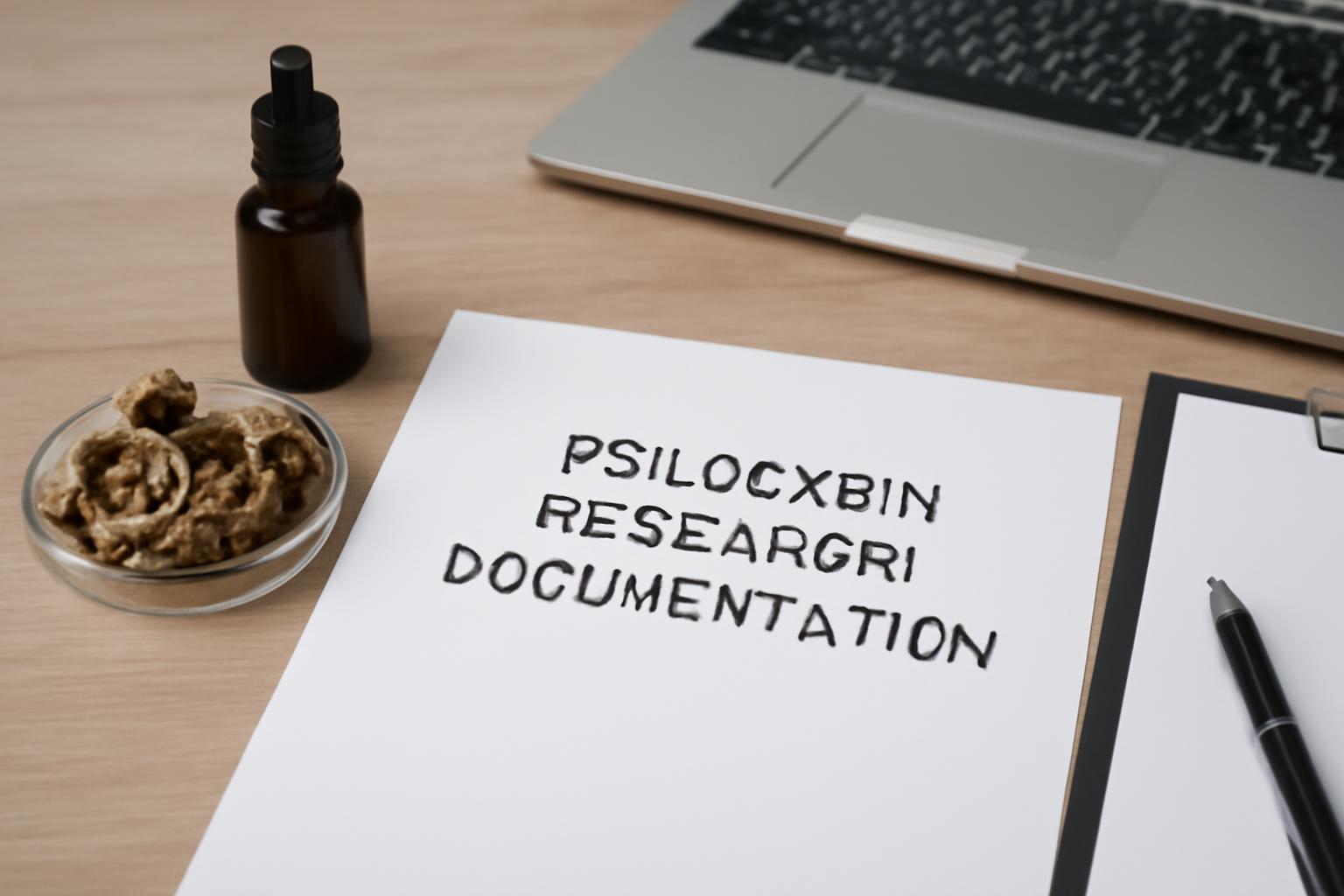
As psychedelic mushroom research expands in the United States, attention is moving beyond promising findings and toward the quality of the materials and records behind each study. Researchers, laboratories, and sponsors need to show exactly what was tested, how it was handled, which methods were used, and whether the resulting data can be independently evaluated.
This is why psilocybin research documentation has become an essential part of psychedelic mushroom scientific research. Good documentation does not simply support a final report. It creates a traceable connection between a research material, its chemical profile, the laboratory process, and the conclusions drawn from the data.
For anyone exploring a psychedelic mushroom research information resource, understanding this documentation process can make technical studies easier to evaluate. It also helps distinguish carefully controlled laboratory work from informal claims that lack verifiable methods.
What Is Psilocybin Research Documentation?
Psilocybin research documentation is the organized record of information created during the selection, receipt, storage, testing, and analysis of psilocybin-containing materials. Depending on the project, it may include laboratory notes, certificates of analysis, sample identifiers, chain-of-custody forms, test methods, instrument records, and data review logs.
The goal is reproducibility. A qualified researcher should be able to understand how a sample moved through the study and how the reported results were generated. If a result cannot be traced back to a specific sample and method, its scientific value becomes more difficult to assess.
Common documentation categories
- Material identity: The name, source, form, batch or lot number, and description of the research material.
- Sample receipt: The date received, condition of the package, quantity, and person or facility accepting it.
- Storage records: Temperature, light exposure, humidity controls, container type, and access history.
- Analytical methods: The instruments, preparation procedures, calibration information, and validated or qualified methods used.
- Results and calculations: Raw data, processed data, units, detection limits, and calculations used to reach final values.
- Quality review: Deviations, corrective actions, data checks, approvals, and version history.
Why Documentation Matters in Psychedelic Mushroom Research
Natural fungal materials can vary significantly. Species, strain, growing conditions, harvest timing, drying procedures, storage, and processing may all affect chemical composition. Two samples with similar appearances may not have the same levels of active compounds or the same profile of secondary metabolites.
Without complete records, it may be impossible to determine whether differences in study results came from the biological question being investigated or from inconsistent research materials. Documentation helps researchers separate those variables.
It also supports communication between laboratories. A mushroom research laboratory supplier, analytical facility, and academic research group may each handle a sample at different stages. Clear records reduce confusion when materials change hands or when a study is repeated using a new batch.
Key Records in a Well-Controlled Research Workflow
1. Material identity and batch records
Every research material should have a unique identifier. This may be a batch number, internal sample code, or laboratory accession number. The identifier should remain consistent across packaging, instruments, spreadsheets, reports, and archived files.
Material records should describe whether the sample is a whole mushroom, dried biomass, powdered material, extract, purified compound, or reference standard. The record should also state whether the material is intended for qualitative screening, method development, stability work, or another laboratory purpose.
Precise labeling is especially important when a project includes several mushroom species or multiple collection sites. A broad label such as “psychedelic mushrooms” is not enough for a controlled scientific workflow.
2. Chain of custody and sample handling
Chain-of-custody records show who received, transferred, prepared, tested, and stored a sample. These details may seem administrative, but they are important when results must be defended or compared later.
A useful chain-of-custody record can include:
- Sample identification number
- Date and time of each transfer
- Name or role of the person responsible
- Amount received and amount consumed during testing
- Container condition and seal information
- Storage location and conditions
- Final disposition or archival status
These records are valuable for psychedelic fungi laboratory analysis because they help confirm that the reported result belongs to the intended sample and was not confused with another material.
3. Method and instrument documentation
A laboratory result is meaningful only when the method behind it is described clearly. Documentation should identify the analytical technique, sample preparation steps, instrument configuration, calibration approach, and relevant quality controls.
Depending on the project, laboratories may use chromatographic, spectrometric, gravimetric, microscopic, or molecular methods. Each method answers different questions. A chemical assay may estimate the concentration of a target compound, while a microscopy or DNA-based workflow may address physical or biological identity.
Researchers should avoid treating one method as a complete answer to every question. A test designed for compound measurement may not establish species identity, and a species identification workflow may not determine chemical potency. Good psilocybin research documentation makes these boundaries clear.
4. Reference materials and controls
Reference materials help laboratories compare an unknown sample with a known target. In psilocybin chemistry research, laboratories may use analytical standards or reference materials to support identification, calibration, and method performance checks.
Records for these materials should include the name, lot number, concentration or assigned value, storage requirements, expiration or review date, and certificate information when available. The laboratory should also document how the material was prepared and how much was used.
Controls are equally important. Blank samples can reveal contamination, while known controls can show whether an analytical run performed as expected. If a control fails, the laboratory should document the investigation rather than silently reporting the results.
Documentation Supports Better Data Interpretation
Researchers often focus on the final number in a report, such as a measured concentration or detected compound. However, the number should be interpreted alongside information about uncertainty, sample preparation, instrument performance, and method limitations.
For example, a result near a laboratory’s reporting threshold may require a different interpretation from a result far above that threshold. A sample that underwent repeated freeze-and-thaw cycles may also need to be discussed differently from a sample stored under controlled conditions.
Complete records help researchers answer practical questions:
- Was the sample homogeneous before testing?
- Was the material exposed to heat, moisture, or light?
- Were the instruments calibrated and functioning properly?
- Were results calculated using the correct sample weight and dilution?
- Were unusual findings investigated?
- Can another laboratory repeat the process?
How Documentation Helps With Stability and Storage Studies
Stability research examines how a material changes over time under defined conditions. This may include changes in chemical composition, moisture, appearance, or other measurable characteristics.
For a stability study to be useful, the documentation should record the starting material, packaging, storage environment, sampling schedule, analytical method, and any deviations. Researchers should also distinguish between an actual change in the material and a change caused by inconsistent sample preparation.
This information is relevant to psychedelic mushroom cultivation research and post-harvest studies. Growing conditions may affect the initial material, while drying and storage may influence what remains available for later analysis. A carefully documented timeline helps researchers study these stages separately.
Building a Practical Documentation System
A documentation system does not have to be complicated to be effective. Small research teams can begin with standardized templates and controlled file naming. Larger organizations may use laboratory information management systems to connect samples, instruments, results, and approvals.
Useful practices for research teams
- Assign a unique code to every incoming research material.
- Use the same sample identifier in physical labels and digital files.
- Record storage conditions at receipt and throughout the study.
- Separate raw data from edited or summarized results.
- Track document revisions instead of overwriting earlier versions.
- Record deviations promptly and explain their potential effect.
- Use review signatures or electronic approvals for critical steps.
- Archive records according to the project’s retention requirements.
Teams can also create a documentation checklist before ordering psilocybin research materials. The checklist may cover material description, packaging, labeling, storage, testing goals, analytical standards, and reporting expectations.
Choosing a Research Supplier or Testing Service
When evaluating a psychedelic mushroom research supplier or mushroom laboratory testing service, documentation practices should be part of the review. A supplier or laboratory should be able to explain how materials are identified, labeled, stored, and described.
Questions to consider include:
- Is each material assigned a clear batch or lot identifier?
- Are the intended research uses and limitations stated plainly?
- Are testing methods described in understandable language?
- Does the report distinguish measured values from estimates?
- Are sample condition and storage requirements documented?
- Can the laboratory explain its quality-control process?
No document can replace qualified scientific oversight. Research materials should be handled by authorized laboratories and trained professionals, in accordance with applicable federal, state, and local laws. Psilocybin and LSD remain controlled substances under United States federal law, and rules can vary by jurisdiction.
What Strong Documentation Cannot Prove
Detailed records improve confidence in a study, but they do not automatically prove that a material is safe, effective, legal to possess, or suitable for human use. Documentation supports the quality and traceability of research; it does not replace toxicology, clinical oversight, regulatory review, or ethical approval.
It is also important to avoid confusing a certificate or laboratory report with a universal guarantee. A report applies to the sample tested under the stated conditions. It may not represent every unit, batch, species, or product associated with a similar name.
The Future of Psilocybin Research Documentation
As psychedelic mushroom scientific literature grows, researchers will likely place greater emphasis on standardized reporting. Consistent sample identifiers, shared terminology, transparent analytical methods, and accessible data records can make results easier to compare across laboratories.
Better documentation may also support collaboration between mycology researchers, analytical chemists, pharmacologists, and clinical teams. Each field asks different questions, but all depend on knowing what material was studied and how its properties were measured.
Readers who want to follow emerging topics can explore the site’s published post index and browse available research categories as the library develops.
Frequently Asked Questions
Why is psilocybin research documentation important?
It creates a traceable record of the material, handling process, analytical method, results, and quality review. This helps researchers evaluate reliability and repeat the work.
Is a certificate of analysis enough for scientific research?
Usually not by itself. A certificate may summarize selected test results, but researchers may also need raw data, method details, sample history, storage information, and quality-control records.
What are psilocybin reference materials used for?
Reference materials can support compound identification, calibration, method development, and performance checks. They should be documented with information such as lot number, assigned value, storage conditions, and preparation history.
Can chemical testing identify a mushroom species?
Not necessarily. Chemical testing and species identification address different questions. A laboratory may need separate morphological, molecular, or other validated approaches to evaluate biological identity.
What should researchers record when storing mushroom materials?
They should record the container, location, temperature, humidity when relevant, light exposure, access history, and any changes in the sample condition. The exact requirements depend on the research design and material.
Conclusion
Reliable psychedelic fungi research depends on more than advanced instruments or interesting findings. It depends on a complete record of what was studied, how it was handled, how it was tested, and how the results were reviewed.
For laboratories, suppliers, and research teams, strong psilocybin research documentation improves traceability, supports reproducibility, and makes scientific communication more precise. As the field develops, careful documentation will remain one of the clearest indicators of responsible psychedelic mushroom research.